

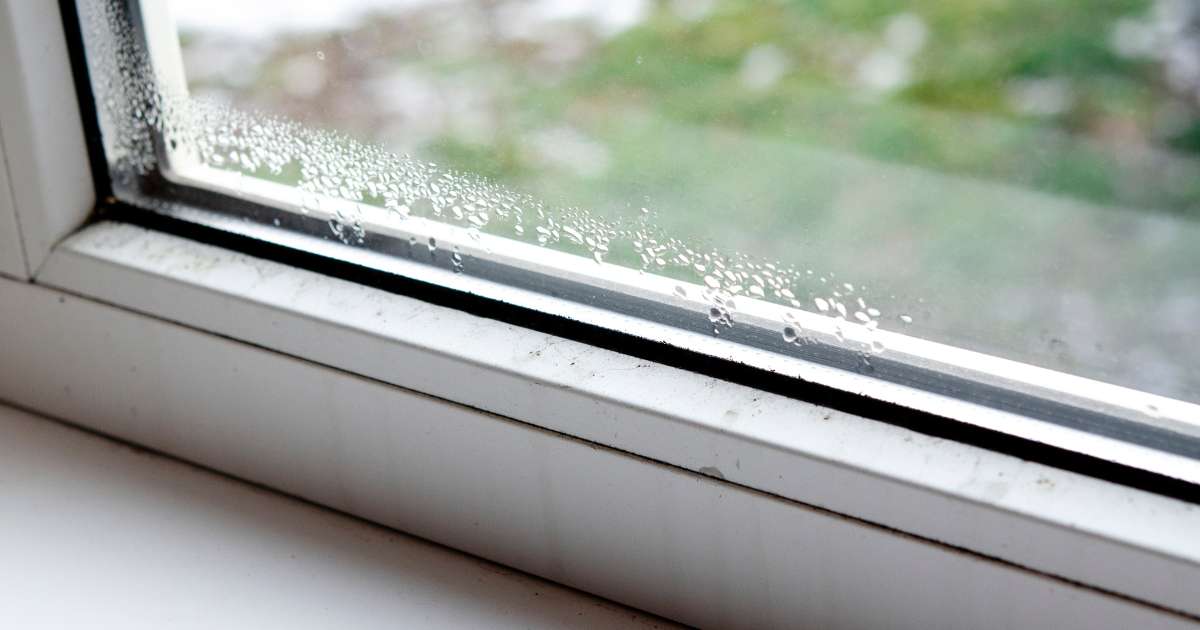
Open the curtains on a cold Ayrshire morning and the glass is running with water, the sills are wet and there’s a puddle gathering in the corner of the frame. Window condensation is one of the most common winter complaints we hear about, and the cause is usually simpler than people expect.
What causes window condensation
Warm air holds more moisture than cold air. When warm, damp air in your home touches a cold surface, it cools down and can’t hold all that moisture any more, so it turns back into water on the surface. In winter, the coldest surface in most rooms is the window glass.
That moisture comes from everyday life. Cooking, showers, boiling the kettle, drying washing on the radiators and even breathing overnight all add water to the air. In a Scottish winter, when the washing goes on the clothes horse rather than the line and the windows stay shut, it builds up quickly.
Three kinds of condensation, three different meanings
On the inside of the glass. This is the most common. It means the air in the room is too humid for how cold the glass is. Better ventilation and less moisture usually sort it.
On the outside of the glass. You may see this on clear, cold mornings. It’s generally a sign your glazing is doing its job: heat is being kept inside, so the outer pane stays cold. It clears as the day warms up.
Between the panes. If you see misting or droplets inside a double-glazed unit that you can’t wipe away, the seal on that glass unit has failed. Damp air has got into the gap and the unit is no longer insulating as it should. No amount of ventilation will clear it.
How to reduce window condensation
- Open the trickle vents. If your windows have them, keep them open, especially in bedrooms, kitchens and bathrooms. They let damp air out without making the room cold.
- Use extractor fans. Run them while you cook or shower and for a while after.
- Air the room after a shower or bath. Open a window for ten minutes with the bathroom door shut.
- Put lids on pans. It sounds small, but it keeps a lot of steam out of the air.
- Dry washing carefully. Outside when you can. Indoors, use a room with the window ajar or a vented or condenser dryer.
- Keep the heating steady. A house that swings between cold and hot gets more condensation than one kept at a low, steady temperature.
- Leave a gap behind curtains and furniture. Let air move across the glass and walls.
- Wipe the windows each morning. Dry the glass and sills so water doesn’t sit on the frames.
- Consider a dehumidifier for rooms that stay damp despite the above.
When the windows are part of the problem
Good habits make a big difference, but sometimes the windows themselves are making condensation worse. Single glazing and older double glazing leave the inner pane much colder, so it reaches the point where condensation forms far sooner. Older windows may also have no trickle vents, leaving no easy way for damp air to escape.
Modern double-glazed windows keep the inside pane warmer, which means less condensation forms in the first place. Many also come with built-in trickle vents. If you’re replacing windows anyway, styles such as casement windows are a popular choice for homes across Ayrshire.
If your windows are letting in draughts as well, our guide to draughty windows covers what you can fix yourself.
When to take it more seriously

A bit of morning condensation is normal in winter. Look more closely if you notice:
- Black mould around the frames, on the sills or in the corners of the room
- Timber sills or frames that are soft, stained or rotting
- Peeling paint or damp patches on the walls near the windows
- Condensation that stays all day despite good ventilation
These suggest a damp problem that won’t go away on its own, and it’s worth getting advice before it causes lasting damage.
Get advice on your windows
If your windows stream every morning whatever you do, or you’ve spotted misting between the panes, Ayrshire Trade Frames can help. We’ll look at what’s causing it and talk you through the options.

